
Systems Design for Permanent Affordability
Pathway to Equity is a systems integrator, serving as the systems architect for ownership, governance, capital, and stewardship structures in resident-owned housing.
We work with communities and local partners to design and align these structures from the outset—so long-term affordability, resident control, and durability are embedded early, not retrofitted later.
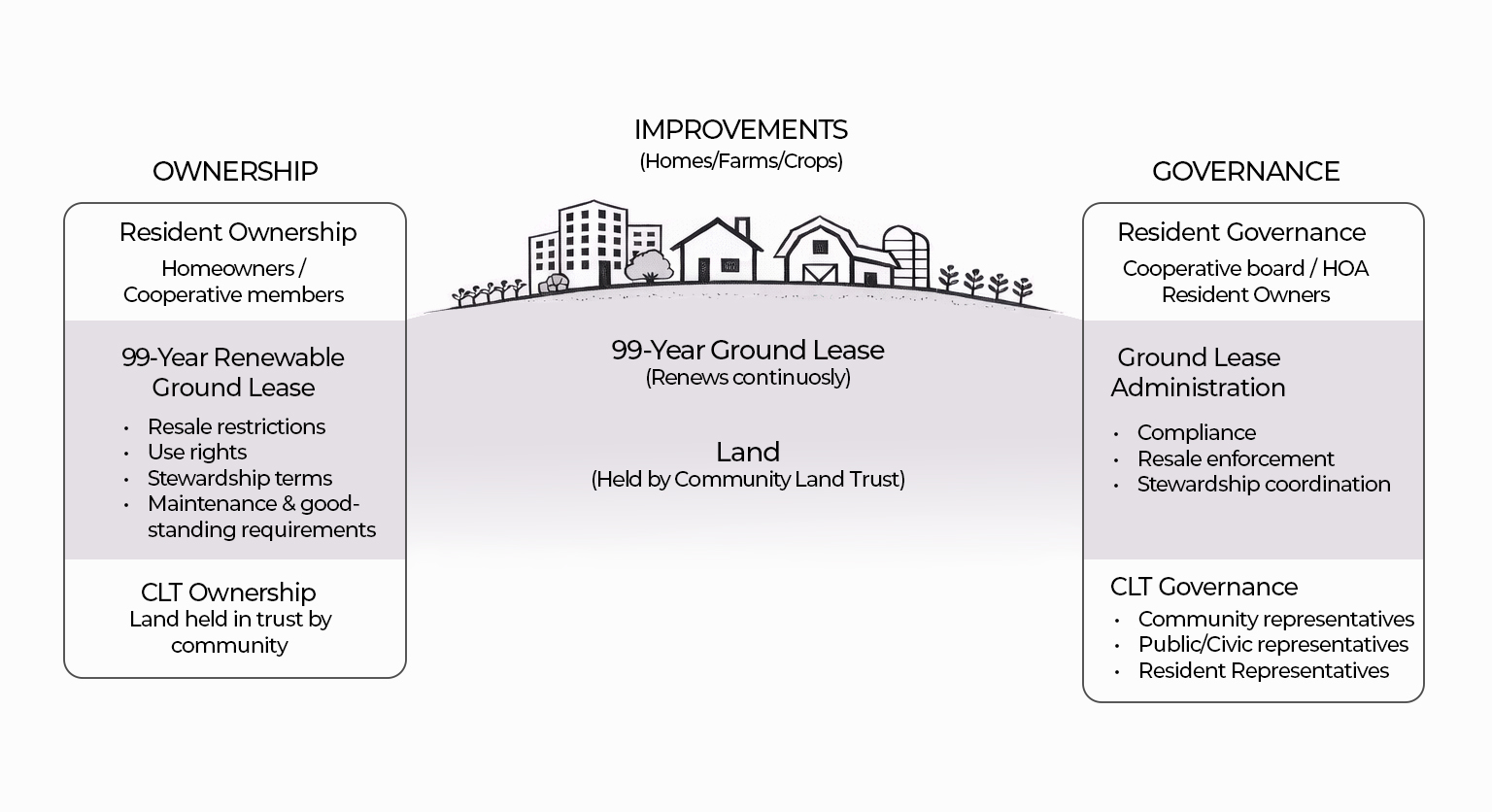
What We Design
Ownership & Affordability Mechanisms
CLT ground lease + resale formula
Governance Structures
Resident power + checks
Capital + Legal Integration
Lender / agency-ready
Planned Transition
Developer exit → resident control
What We Don’t Do
- Build housing
- Own property
- Act as a landlord
Where We Engage
- New construction projects
- Existing building acquisition/conversion
- Fee-simple ownership projects with permanent land stewardship (condos/homes/farms)
Consistent Services, Different Starting Conditions
Each Path applies the same core principles—permanent affordability, resident governance, and long-term stewardship—across different property contexts. Whether working with new construction, existing buildings, or direct ownership structures, the starting conditions vary, but the commitment to long-term community control does not.
To see how these principles are implemented in practice, explore Our Paths.
Why CLTs Matter
Permanent Stewardship & Governance
A Community Land Trust (CLT) is a core structural tool for long-term affordability.
As a nonprofit land steward, a CLT holds land on behalf of a community so homes remain permanently affordable, while residents build equity through ownership of their homes or in shares of the cooperative that owns them.
To ensure resident benefit while safeguarding long-term community and public interests, CLTs are governed by a tripartite board representing residents, community members, and public-interest stakeholders.
How It Works
A Phased Implementation Model
Early Structuring
Before development begins, ownership, affordability mechanisms, and governance frameworks are defined so long-term outcomes are embedded from the start.
Synthesis During Development
As projects move forward, legal, financial, and governance structures are integrated so capital, approvals, and construction reinforce permanent affordability and resident ownership.
Planned Transition
At stabilization or completion, control is deliberately transferred from developers or sponsors to residents in ways that preserve affordability and governance integrity.
Durable Stewardship
After transition, long-term accountability and stewardship systems ensure affordability and resident governance endure.
Why This Matters
Limits of Time-Based Affordability
Most affordable housing models rely on time-limited affordability covenants tied to public subsidy programs. Once those covenants expire, affordability and community control are often lost as properties revert to market rates.
Affordability expiration removes more than price protections—it transfers control over land value, determining who captures appreciation, sets use, and extracts future returns. Appreciation created through public subsidy, zoning, and infrastructure is no longer stewarded for community benefit and instead accrues privately.
Residents do not have to remain perpetual tenants while value is extracted from their communities. Through resident ownership, with land held in long-term community stewardship, value circulates locally—supporting long-term stability for families, schools, and neighborhoods.
Resident ownership creates incentives for care, stewardship, and sustained investment, while providing households with stability, agency, and an economic foothold that rental models cannot offer. In some contexts, fee-simple ownership of mixed-use, commercial, or productive property can also support long-term residency by anchoring income, services, or community control directly to place.
Paired with durable governance and permanent affordability structures, ownership allows public investment to compound rather than reset with each compliance cycle.
Pathway to Equity works with communities and partners to apply these structures across diverse property types and project contexts.
Resident Readiness for Self-Governance
Pathway to Equity designs phased education and hands-on apprenticeship in advance of ownership and governance transfer. Training is delivered by qualified community partners under shared standards, ensuring residents are prepared to steward assets, participate in decision-making, and assume long-term governance responsibilities.
Structure—not subsidy alone—determines whether affordability survives.