
How Residents and Communities fit in this Framework
This page explains how resident ownership works, what participation can look like, and what to expect in housing designed for long-term community control.
Stable housing is about more than affordability
It is about long-term control, shared responsibility, and a real voice in the future of your community.
How Resident Ownership Works
Resident ownership does not look the same everywhere—but when designed intentionally, it includes long-term affordability and shared responsibility.
Pathway to Equity helps communities understand and engage with models such as:
- Community land trusts paired with cooperative ownership
- Shared-equity ownership structures
- Long-term ground leases that protect affordability and resident control
The specific structure depends on local context, but the principles remain consistent.
To see how these principles are shaped for different property types and situations, explore our paths:
What We Do for Residents & Communities
Our role is to help make sure resident-owned housing is set up to work long-term.
For residents and communities, that means creating models that:
- Preserve affordability across generations
- Provide meaningful resident governance and decision-making power
- Protect homes from speculative resale and displacement
- Support long-term stewardship of shared assets
These outcomes depend on ownership and governance being designed with durable legal structures, not just good intentions.
Governance Structure Overview
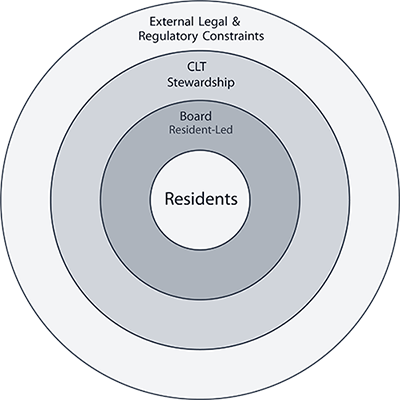
Governance is layered to balance resident power, long-term stewardship, and accountability.
Resident Participation
Depending on project path, residents participate through:
- Membership in a cooperative or association
- Voting and board representation
- Shared stewardship and long-term decision-making
Governance roles by layer:
- Residents: Vote, elect boards, and participate in major decisions
- Resident-Led Board: Oversees operations, policies, and stewardship
- Community Land Trust: Holds land, enforces affordability, and supports governance
- Funders / Regulators: Provide capital, oversight, and compliance accountability
What to Expect
Pathway to Equity approaches this work with care and realism.
Residents can expect:
- Clear explanations of ownership and governance options
- Transparency about tradeoffs and responsibilities
- Models designed for long-term stability, not short-term gains
This work supports long-term stability, shared responsibility, and resident voice over time.
If this approach resonates with your community or housing situation, you’re welcome to reach out to start a conversation.