
Redesigning ownership at its pressure points
- Pathway to Equity designs ownership and governance systems that remain durable through refinancing and investor exit.
- The organization operates upstream — before capital structures are locked — to align ownership form, governance authority, and capital transition.
- This work focuses on the structural conditions required for resident ownership to persist across financing cycles.
Founded by Maya Sahafi, Pathway to Equity emerges from three decades of speculative urban infill development navigating entitlement risk, capital partners, historic preservation constraints, public review processes, and defined exit timing.
Across complex regulatory environments, project viability depended on disciplined capital structuring, entitlement sequencing, construction execution under scrutiny, and the ability to align financing with clearly defined outcomes.
That discipline informs this work.
Founder’s early precedent setting work
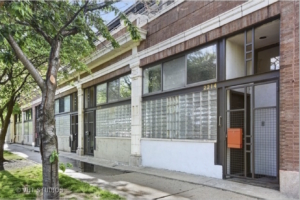
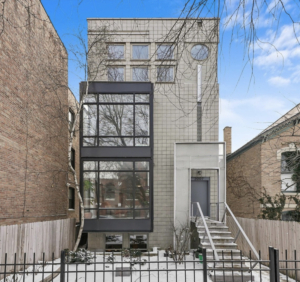
These projects marked Sahafi’s early work navigating the intersection of design, regulation, and development.
In her first project, she secured targeted rezoning from R3 to R5 to enable residential conversion without parking requirements, followed by immediate downzoning to prevent broader zoning impact. The project was later published by the Chicago Landmark Commission as a model case study for storefront adaptive reuse.
Her second project introduced the first modernist building within the Wicker Park Historic District—listed on the National Register of Historic Places and designated a Chicago Landmark District—after extended public debate, ultimately receiving formal recognition for excellence from the Commission.
These projects required navigating political process, regulatory scrutiny, financing coordination, and execution under public visibility. They demanded fluency in entitlement process, capital structuring, and regulatory negotiation.
Why This Work
Founder’s perspective
Housing stability is not abstract to me. I left home at thirteen and did not reach stable housing until adulthood. Ownership did not seem possible.
Years later, unexpectedly pregnant and needing more space, I began analyzing properties within our price range. Nothing we could afford produced enough rental income to support the debt. Instead, I identified an off-market 1880s commercial building. If we added floors and converted the storefronts into townhomes, projected sales could retire the loan. I negotiated owner financing requiring a 50% down payment, with six months to deliver the balance.
To obtain a construction loan, the bank required full entitlements and 20 percent of the units presold before closing. Shortly after signing the contract — before design work began — our architect suffered a medical emergency. I moved forward with the structural engineer, led the building design, and hired drafting support to produce a complete, buildable set of plans.
We closed the construction loan five days before the six-month deadline.
Without defined ownership, authority, and exit, capital does not move.
That lesson shaped the next three decades of speculative urban infill development, where every project required disciplined capital structuring, entitlement sequencing, and defined exit timing.
After decades inside speculative development, I had the freedom to choose what to build next — and whether to continue operating within the same capital logic.
Rising wealth concentration and shrinking pathways to ownership make structural redesign urgent.
Ownership must be separated from land speculation.
Governance must be defined before capital closes.
Stewardship must be institutional, not informal.
Pathway to Equity is the structural response.
This work does not repair symptoms.
It redesigns the structural conditions that produce them.